
UK · Individual landlords using MTD for Income Tax
Making Tax Digital: what landlords need for the 7 November update
The next Making Tax Digital update is due on 7 November. It covers income and expenses from the start of the reporting year, not just the last three months. For landlords already in the system, this is the moment to check the records and who will submit them.
5 October 2026
Standard period ends
Calendar reporters use 30 September instead. Check the period already selected in your software.
7 November 2026
Next update due
The deadline is the same for standard and calendar periods. This is not a quarterly tax payment date.
7 February 2027
Following update due
Resolve the November handover now so the next submission does not become another search for missing records.
Which months belong in this update?
Use the period already selected in your filing software. Both have the same November deadline.
Standard reporting
From6 April2026
Through5 October2026
The April to July records stay included. The November update covers the whole span, not just 6 July to 5 October.
Calendar reporting
From1 April2026
Through30 September2026
The April to June records stay included. The November update covers the whole span, not just July to September.
6 April to 5 October 2026. Update due 7 November 2026.
What is due on 7 November?
Landlords required to use Making Tax Digital for Income Tax in 2026/27 have their next quarterly update due on 7 November 2026. HMRC’s first year guidance, updated on 7 September, confirms the date. The update is sent through compatible software. An accountant or tax agent can handle it where the necessary arrangements are in place.
If your records sit partly with a letting agent, partly in a bank feed and partly in an email folder, agree the handover now. An owner statement being available does not mean the accountant has received it. Ask which period is needed, when the records must arrive and who will confirm that the update was accepted.
This deadline does not apply to every landlord
The April 2026 requirement applies to qualifying individuals whose 2024/25 qualifying income exceeded £50,000, subject to exemptions. This is an Income Tax obligation for individuals, not a new quarterly filing requirement for a limited company simply because it owns rental property. Use HMRC’s eligibility guidance and checker for your position.
The threshold concerns combined gross qualifying property and self employment income, not the profit left after expenses. Salary is not added to that qualifying income. Joint ownership, tax residence and changes to income can complicate the calculation, so use the specific qualifying income guidance rather than comparing the threshold with your bank balance.
Illustrative example: £32,000 of qualifying rental income and £21,000 of qualifying sole trader turnover in 2024/25 total £53,000 before expenses. Neither source exceeds £50,000 alone, but the combined figure does. This simplified example assumes both sources count and no exemption applies. It is not a calculation of tax owed.
Include the earlier months too
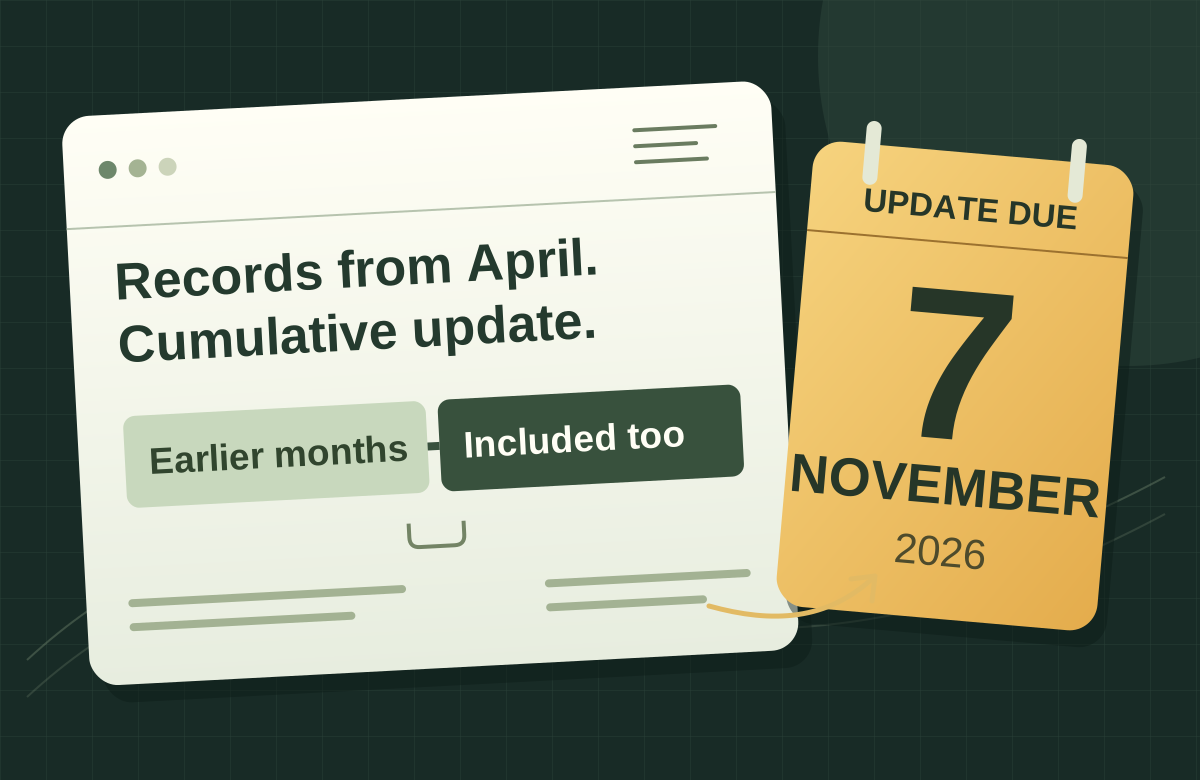
For the November deadline, standard reporting covers 6 April to 5 October 2026. Calendar reporting covers 1 April to 30 September 2026. The update is cumulative. Preparing only July to September can leave out information that belongs in the submission.
Check the period already used in your software. HMRC says you cannot change between standard and calendar periods for a tax year after sending a quarterly update. The explorer above explains the difference; it does not choose a reporting basis for you. The official period guidance remains the reference.
A bank deposit may not tell the whole story
Start with records covering the full period. Match the rent and booking statements with the relevant bank transactions and supporting documents. A platform or agent payout may already reflect fees, refunds or other adjustments. Trace those differences rather than assuming the amount deposited is the whole rental receipt.
HMRC’s digital record guidance requires an amount, date and category. A bank feed may need more information and may not show every transaction in full. Keep supporting invoices and statements too. A tidy total is difficult to check if nobody can explain what was included.
Ask the person preparing the update about anything unclear before making a convenient category choice. An invoice that covers repair work and an improvement needs more attention than its supplier name. Keep a short note of the question and the document concerned so the answer can be applied consistently, rather than guessed again next quarter.
Check that the records reach the filing software
A property management system, a spreadsheet and an MTD submission product do not necessarily do the same job. HMRC’s software guidance explains the available arrangements, including bridging software for existing records. Check the actual product and the features you need, not just whether its advertising mentions tax.
Where more than one product is used to keep the digital records and submit them, the required digital links matter. HMRC explains that manual retyping or copying and pasting records after they have been included in an update is not a substitute for those links. Agree the export and import method with your accountant rather than sending a screenshot and assuming the transfer is complete.
If someone files for you, confirm their MTD authorisation and their access to the right records. Ask when they will review the information and how they will raise a missing item. Save the submission confirmation where you can find it. An email saying “sent over” could mean the records reached the accountant, not that an update reached HMRC.
The update is not a demand to pay tax every quarter
MTD does not turn this November date into another tax payment deadline. The annual return and tax payment arrangements remain separate. Your software may show an estimated bill, but that is not necessarily the final liability and may not reflect everything that belongs in the eventual return.
A holiday let owner also needs to distinguish digital reporting from the tax treatment of the income. Sending an MTD update does not restore the former furnished holiday lettings regime or decide which expenses and reliefs apply. Our holiday let tax article covers that separate change. Discuss the calculation with a suitable tax adviser.
What if an update is late?
HMRC will not apply late quarterly update penalty points for the 2026/27 tax year. The updates are still required before the tax return can be submitted. This first year position does not remove penalties for a late annual return or late tax payment. Read the current first year explanation before relying on a headline about a penalty holiday.
If you should already be using MTD but have not started, contact your accountant or follow HMRC’s sign up guidance promptly. Explain what has and has not been submitted, including the August update. Do not create a second set of approximate figures merely to make a deadline look met. Establish the correct records and the appropriate submission route.
Leave a clear record of this submission
Our blank MTD update record gives you a place to note the reporting period, records supplied, questions still open and the eventual confirmation. It is a private preparation record, not compatible filing software, a tax return or a submission to HMRC. Do not put account passwords or verification codes into it.
Illustrative handover: an owner receives a September statement showing a fee adjustment relating to an earlier booking. They send the statement and the underlying adjustment to the accountant, who checks how it belongs in the cumulative records. The owner keeps the question visible until it is resolved and then saves the actual submission confirmation. Merely forwarding the statement would not show that the issue was considered.
For the next update, agree a realistic records date before the filing deadline and name who follows up missing documents. Keep management statements and supporting repair records available throughout the year. A useful property CRM arrangement can help organise that handover, but it does not replace the tax software or professional judgement.
Who keeps the property records?
Tell us about the property and the work you need help with. We can explain what a management agreement would cover and what stays with you or your adviser.