
Highland visitor levy consultation: what accommodation providers should check
Highland accommodation providers can still help shape a proposed visitor levy. The council has announced a further information webinar before consultation closes. Here is which proposal to read, what the suggested charge means and how to prepare questions using the way your property actually trades.
Start with the current proposal
As at 16 October 2026, Highland Council has not decided to introduce a visitor levy. The present consultation opened on 7 September. The 8 October announcement invited people to information webinars. Those are separate developments, and neither establishes a charge that Highland hosts should collect today.
The council now separates its current fixed amount consultation from the previous percentage consultation. Older documents remain available for reference. Read the current proposal before using a figure found in a saved PDF or an earlier article.
There is no approved start date. The council envisages considering a decision on 10 December 2026, with an 18 month implementation period following any approval. For now, use the consultation to examine practical questions rather than changing guest bills for a scheme that has not been adopted.
Keep each property’s location clear when reviewing visitor levy news. A business operating in several council areas needs to check each local scheme separately. Our Edinburgh return article concerns that city’s operating levy and a different task for providers.
Understand the suggested charge before doing the sums
The 7 September proposal suggests £5 per room or area per night for accommodation including short lets, and £2 for hostels, campsites and caravan parks. It would cover nine months, excluding December, January and February. Providers would retain 5% of the levy collected for administration.
Illustrative arithmetic: assume one chargeable unit for a three night stay at the higher proposed rate. The amount would be £15. Retaining 75p would leave £14.25. This simplified example excludes VAT and assumes no exemption. It is neither a live guest bill nor a profit forecast.
The retention is a share of the levy collected. It does not mean a 5% tax on the accommodation price. It also does not establish that the retained amount would cover the work involved in your particular business.
Do not assume that every bedroom in a holiday home is a separate chargeable unit. Establish how the council’s current documents treat your actual letting arrangement before multiplying anything. VAT, exemptions and unusual stays also need the current council explanation and, where appropriate, professional advice. Leave an unanswered question visible rather than turning it into a definite price.
Use booking records to show what the proposal means for you
Choose a recent trading period and explain why it is useful. Look at the stays that actually took place, their length and the accommodation sold. A year containing an extended closure will tell a different story from a full year of trading. Record that limitation alongside your figures so the comparison can be understood.
Keep guest costs separate from the cost of administering a possible scheme. The proposed charge can be illustrated using explicit assumptions. Administration needs its own evidence: who would check the booking, answer a guest query, deal with a change and reconcile the eventual records? Describe the work you expect, distinguishing anything you have measured from an estimate.
A fixed charge also needs to be considered alongside the accommodation price. The same cash amount can represent a different share of a modest booking and an expensive stay. Show the underlying figures if making that argument. Do not claim that guests will stop booking, or that prices can simply rise, without evidence for the conclusion.
Seasonality deserves the same care. Compare the months your property trades rather than assuming that an annual average represents every stay. Our winter short let guide explains why actual running costs and booking patterns matter when assessing the business. A consultation calculation should support that understanding rather than become another income promise.
My cottage has several bedrooms
The proposal uses a room or area as its charging unit. Describe how the accommodation is actually sold and ask how your arrangement would be treated. A whole property booking and separately sold rooms should not silently become the same assumption in your figures.
My agent handles the bookings
Work through who could recognise a chargeable stay, explain the amount to the guest, handle a refund and reconcile the money. Ask which steps the booking system supports and which would need manual work. Use that evidence to explain the administration burden in your response.
Most of my bookings arrive in summer
Compare your actual paid nights and stay lengths across the year. Show how the proposed winter exclusion would affect your own seasonal pattern. An unavailable calendar night may be owner use or maintenance, so do not count it as a paid stay.
Prepare a question the remaining webinar can answer
The remaining council webinar is on 28 October 2026 at 6.30pm. Registered attendees can submit advance questions until noon on 27 October. Follow the council’s registration and question instructions. The session will not be recorded, and attendees will not have microphone, camera or chat access.
Prepare a clear example before asking about a complicated arrangement. Describe how the accommodation is sold and which part of the proposed treatment is unclear. There is no need to include a guest’s identity or a real booking reference to explain an operational problem. Keep private reservation records out of material you intend to share.
Ask for the rule or worked example that would settle the point. If the answer depends on a detail you have not supplied, record what still needs clarification. A general answer about ordinary stays may not resolve your particular arrangement, so avoid copying it into a pricing decision too quickly.
Turn the evidence into a specific consultation response
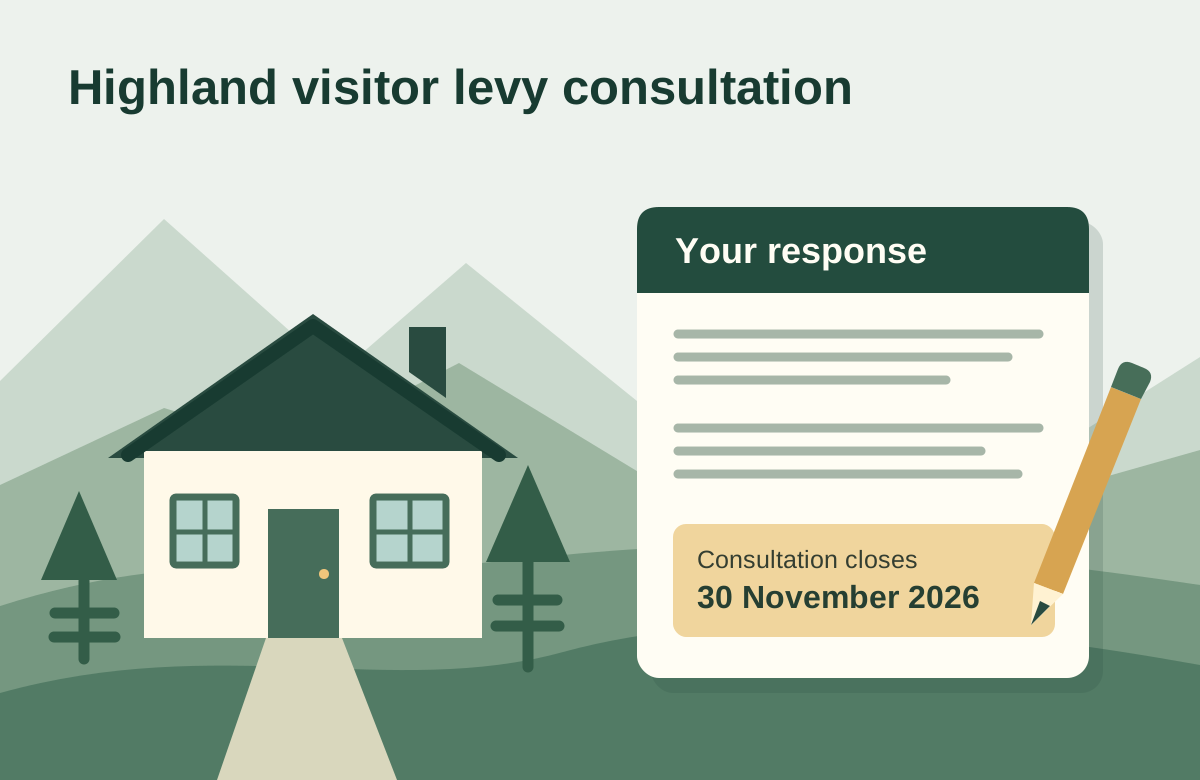
The consultation closes on 30 November 2026. The current council page leads to the formal form and supporting material, and explains how to obtain a paper form. Attending the webinar or keeping a private note does not submit a consultation response.
Explain which feature of the proposal your evidence addresses and what change or clarification you want the council to consider. Separate an observed problem from a possible future effect. If you suggest a different approach, explain how it would work for the accommodation you run and what would need checking before it could be adopted.
The editable response note is a private preparation aid. It gives you room to describe your trading period, assumptions, unresolved questions and supporting records in your own words. It contains no suggested position on the levy. Use the council’s actual questions when preparing your eventual response.
Keep the proposal separate from permission to operate the property. Our national Airbnb permissions guide covers those broader checks. A consultation response is an opportunity to explain your experience of running accommodation; it does not resolve a planning, licensing or tax question for the property.
If you need help with the records and day to day work of running a property, talk to us about your property.