
England, Scotland and Wales · Private parking
New private parking code: what hosts should check
A parking charge can sour a stay before the guest reaches the front door. The government laid its draft private parking code on 20 October. It has a further parliamentary process to complete, but hosts can check their parking instructions and operator arrangements now.
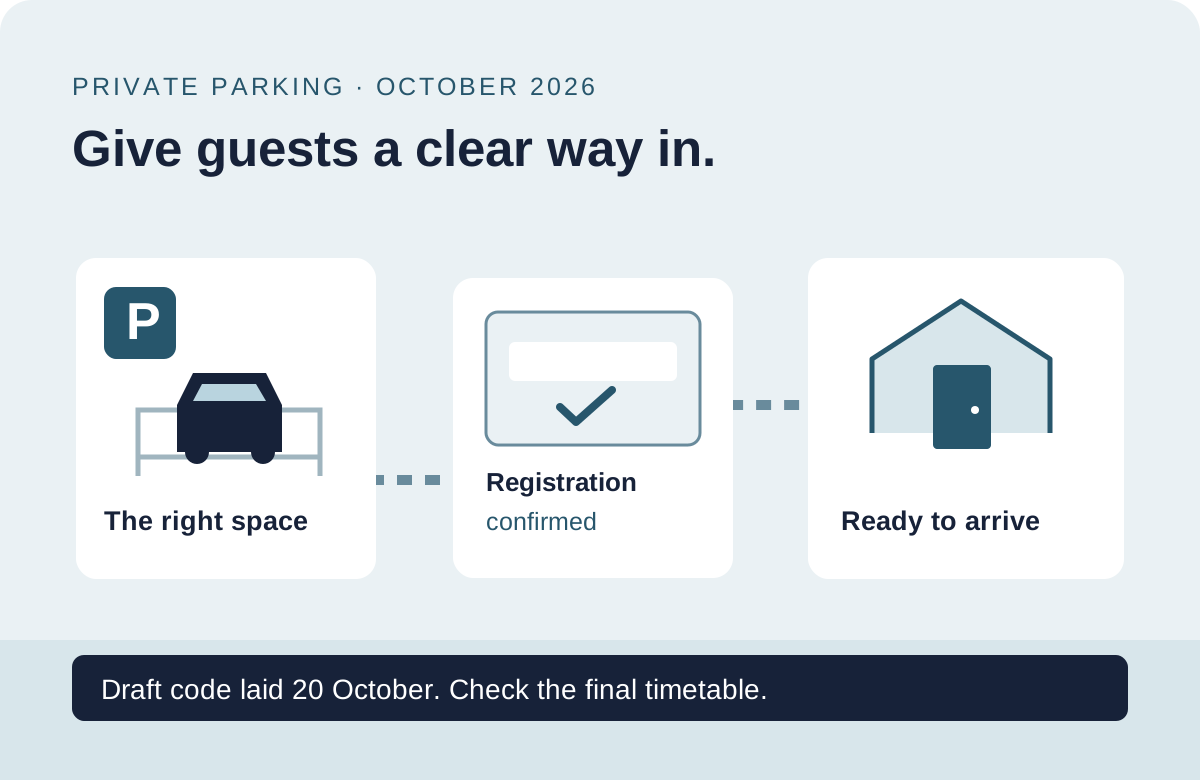
20 October 2026
Draft laid in Parliament
The publication begins a 40 day scrutiny period. Laying the draft does not bring the new code into force.
30 November 2026
Conditional issue date
The government plans to issue the code on this date if parliamentarians raise no objections.
21 days after issue
Commencement comes later
The government also plans flexibility while operators implement new standards. Check the final issue and transition guidance.
The draft is not in force today. Check the actual parking agreement and current appeal route while the parliamentary process continues.
The new code is still a draft
The official publication notice describes a draft laid before Parliament on 20 October 2026, followed by 40 days of scrutiny. The government response plans issue on 30 November if there are no parliamentary objections, with commencement 21 calendar days after issue. Those are different stages, so the new appeals provisions are not available simply because the draft has been published.
The response also describes flexibility during the initial implementation of new standards, with further enforcement detail to follow. It expects the certification arrangements to develop around April 2027. Before changing a parking agreement or telling a guest which rule applies, check the final code, its issue date and the transition guidance then available. This article reflects the position checked on 20 October 2026.
Find out who controls the parking
The draft covers relevant private land in England, Wales and Scotland. Public highways, council parking and parking governed by applicable statutory regimes are outside its scope, and byelaws still matter. Northern Ireland is outside this code. A council visitor permit and a privately managed apartment car park need different instructions.
For each property, establish who owns the spaces, who manages them and what permission the stay includes. A flat’s address does not establish a right to use every bay outside it. Ask the owner or managing agent for the actual parking arrangement before describing a space as included, reserved or free.
Walk the route a guest will take from the road. Compare the entrance, bay number, height restriction and signs with the listing and arrival message. If the property has no allocated space, say where guests may look for parking and how they should check the local restrictions. Avoid making a street parking promise that the property cannot fulfil.
Make registration part of arrival
A guest can have permission to stay and still miss a separate vehicle registration step. Explain who enters the number plate, where they do it and how they know it has worked. Check the arrangements for a hire car, a replacement vehicle or a guest arriving after reception closes. Test the process using the instructions a guest actually receives.
The draft’s Annex B expressly includes hotel guests with booked parking. Its time allowances depend on the parking category and conditions. They are not a universal extra fifteen minutes, and advance booking can have different treatment. Keep your instructions tied to the actual site rather than adding a generic grace period.
Send the parking detail before the guest reaches the entrance, alongside the route and access information. Our property preparation guide explains how to test an arrival with fresh eyes. The welcome book template gives those instructions a place the guest can find again.
A mistake does not always mean cancellation
The draft Appeals Charter distinguishes cancellation from a reduced charge. For example, a minor typing error where the tariff was paid is treated differently from an undisplayed valid permit, payment against the wrong vehicle or missing terminal validation. The latter examples provide for a £20 charge following an appeal to the operator, available for fourteen days. These are draft provisions, not a promise that every registration mistake is free.
If a guest receives a notice today, help them gather the booking, parking entitlement, registration confirmation and relevant photographs. Read the notice and the operator’s current appeal process promptly. A host’s reassurance does not stop a deadline. Agree who will contact the operator and keep the guest informed of the actual response.
A property manager can ask the operator what evidence it needs and whether the landowner has an agreed cancellation route. Do not promise to cancel a charge merely because you manage the accommodation. Where the guest wants you to act for them, establish the authority the operator needs before sharing their information.
Check the lease before changing the permit scheme
Clause 14.1 of the draft draws attention to leaseholders’ existing parking rights, which an operator’s permit requirement may not override. A new scheme should start with the lease and the landowner’s authority, rather than a sign installer’s standard arrangement. The right to park and permission to use a flat for short stays are separate questions. Our short let permission guide covers that wider check.
Keep the parking arrangement with the property’s operating records. Record the agreed spaces, registration method, person responsible for updates and operator contact. When a manager, cleaner or reception team changes, test that someone still owns the task. Clear instructions and a working registration process can prevent a dispute while the code completes its parliamentary and implementation stages.
Who keeps the property records?
Tell us about the property and the work you need help with. We can explain what a management agreement would cover and what stays with you or your adviser.