
Preparing for short lets
How to prepare your property for short lets without losing your mind
A room by room guide to the things guests use, the jobs nobody photographs and the expensive nonsense you can skip.
Put a key safe on a furnished home and you still do not have a working short let. There are beds, boilers, booking calendars, laundry, neighbours and people arriving after dark to organise. This guide puts those jobs in a sensible order.
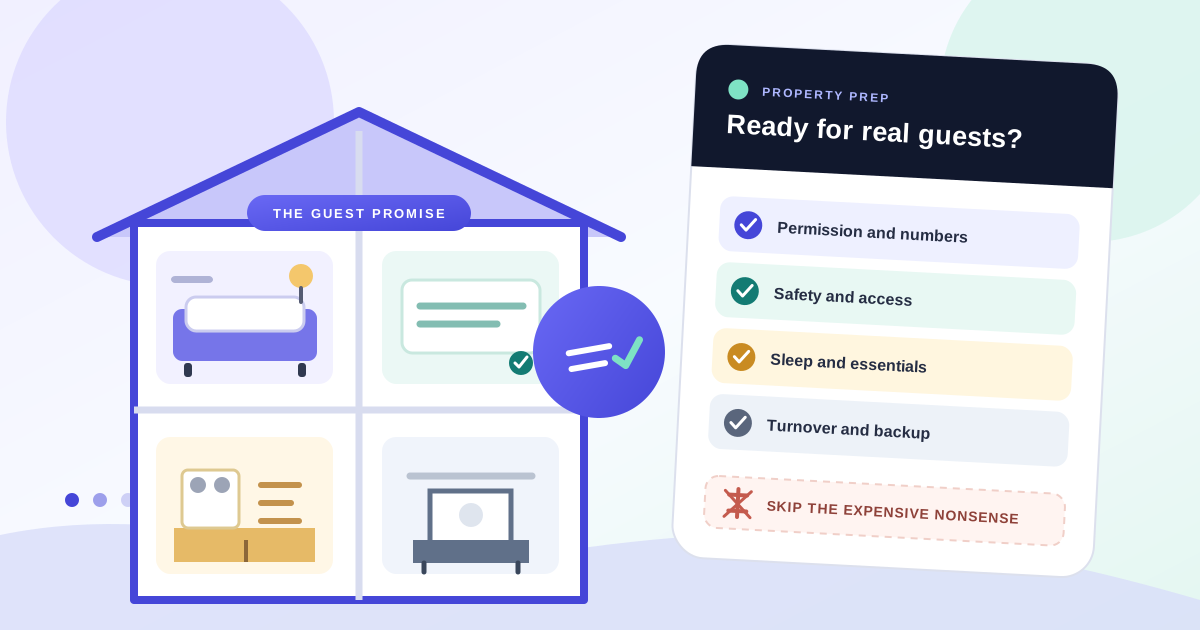
The first shopping trip is not the first job.
Before you buy anything, make sure you are allowed to run the property this way and that the numbers still work when you are cautious. Read the lease or title restrictions. Check the mortgage terms, building rules, planning position, insurance and the current requirements where the property sits. Then decide who is likely to book and how many people the home can comfortably support.
For properties in England, the current government short term holiday home guidance is a useful place to see the main checks, including planning, tax, fire, gas, electrical safety, media licensing, energy performance and insurance. It does not answer every question for your council, building or property. Wales, Scotland and Northern Ireland have different rules.
The must haves are boring for a reason.
Guests need to get in, sleep, wash, eat and know what to do when something goes wrong. Sort those things before you start buying decorative extras.
Safety checks for this actual property
The Home Office says short lets in England need a suitable and sufficient fire risk assessment. The measures must fit the building and the people who may use it. A shopping list copied from another property is not enough.
Check the official fire guideEnough of the basics for every guest
Every sleeping place needs proper bedding. Every guest needs a towel. The home needs working locks, hot water, bathroom basics, seating, tableware and instructions that match what the listing promises.
See Airbnb’s stated basicsA backup for the things that always go wrong
Keys stick. Routers drop. Boilers sulk. Linen gets stained. Write down the backup key plan, who calls the plumber and where the stopcock is. Someone other than you must be able to deal with the problem.
Record the property detailsAirbnb’s own checklist starts with cleaning, basic supplies and an overnight stay. Decorative extras come later. That order makes sense whichever website takes the booking. Read the platform guidance.
Do the boring jobs in this order.
Tap anything you have already done. The board is deliberately less exciting than buying cushions, because this is the work that keeps the property running.
Permission before paint
Prove the property can be used the way you intend before the shopping starts.
Safety and backup plans
Assume something will stop working while you are away. Make sure the guest and whoever is on call know what to do.
Make the rooms work
Set up enough beds, towels, seats, crockery and charging points for the number of guests you advertise.
Make arrival boring
A tired guest should not need detective skills to enter, park, connect or get warm.
Run a full practice turnover
If the clean and restock only work with you standing there, the property is not ready.
Walk through the property like a guest and a cleaner.
Pick a room. Each one shows what you need, what to test, what to avoid and what is not worth worrying about.
The front door and first five minutes
Arriving guests are often cold, carrying bags and trying to work out which door and key are theirs.
A lit route, a working lock, exact access instructions, a tested backup key plan and the full property address where guests can find it.
Walk the route after dark with your phone in one hand and luggage in the other. Photograph the correct gate, door and key safe from the guest approach.
Do not hide the key safe behind a plant and describe it as obvious. Do not depend on one battery, one code or one person answering their phone.
The entrance does not need a hotel lobby. It needs to be safe, findable and exactly as described.
Bedrooms that help people actually sleep
A beautiful headboard cannot rescue a poor mattress, streetlight through a bare window or nowhere to put a glass of water.
A sound bed, clean protected mattress, fresh linen, one usable pillow per guest, bedside light, window covering, charging access and somewhere for clothes or a bag.
Lie on every bed, check the frame for noise and make sure the cleaner can reproduce the photographed setup without an interior stylist.
Do not count a tired sofa bed as capacity until you have tested the mattress, linen storage, room circulation and what it is like to pack away in the morning.
Matching bedside tables are optional. A dark, quiet room and a reliable bed are not.
A bathroom with no small mysteries
The hot water, ventilation and drainage matter more than an army of miniature bottles.
Reliable hot water, clean towels, bath mat, soap, toilet paper, working ventilation, somewhere to hang a towel and a clear way to report a problem.
Take a full shower during the overnight test. Check pressure, temperature, drainage, privacy, mirrors, lighting and where wet towels will go.
Do not leave ten half used toiletries, unlabelled bottles or a decorative shelf that the cleaner has to dismantle every changeover.
Guests do not need a spa. They need the bathroom to feel clean, private and easy to use.
A kitchen sized for the people you advertise
If six people can book, six people should be able to sit, eat and make tea without sharing one fork.
Enough crockery, glasses, cutlery, seats and basic cookware for the maximum guest number, plus a kettle, usable fridge space, washing up supplies and a bin system.
Cook one simple meal. You will find the missing knife, tray, bottle opener or socket faster than any shopping checklist can.
Do not buy a gadget that needs pods, an app, a special cleaning cycle and a paragraph of instructions unless guests truly choose the property for it.
Mugs can be different. They just need to be clean, intact and numerous enough.
A living room people can actually use
This room has to look good in photographs and still work when every advertised guest is sitting in it.
Comfortable seating, useful lighting, a clear heating control, reliable Wi Fi, enough sockets and a surface where guests can eat or work if the listing promises it.
Choose washable, replaceable finishes and leave clear space around furniture. Show any shared areas, low beams, steps or compact proportions honestly.
Do not fill every surface with fragile styling. It creates dust, breakages, lost property reports and slower cleans.
A television in every bedroom is not a universal requirement. Reliable Wi Fi and accurate amenity details matter more.
The cupboard guests should barely notice
The most useful square metre in the property may be locked, labelled and completely absent from the listing photographs.
Separate owner storage, linen rotation, spare consumables, replacement bulbs and batteries, cleaning supplies, a stock count and a safe key handover.
Give each item a home and set the minimum quantity that triggers a reorder. Make it possible for another person to take over without calling you.
Do not scatter spare linen, chemicals and personal belongings around guest cupboards. Confusion becomes missing stock and inconsistent turnovers.
Guests do not care whether the locked supply cupboard looks pretty. Your cleaner and contractor will care that they can find things.
Six templates, in the order you will actually need them.
A useful template stops the same decision being made again at 9pm. These are starting points, so delete anything that does not fit and add the awkward details that do.
Short Let Income Forecast Spreadsheet
Put real assumptions around nightly rate, availability, cleaning, platform costs, management, maintenance and the months that will not behave like August.
Property Information Questionnaire
Record utilities, meters, controls, keys, parking, compliance dates, insurance and contacts before that knowledge lives in six different message threads.
Airbnb and Holiday Let House Rules Template
Write the rules guests need before booking, then keep the fuller version consistent across the welcome book and arrival messages.
Airbnb and Holiday Let Welcome Book Template
Turn access, Wi Fi, heating, parking, safety, waste and checkout into one guide a tired guest can scan from a phone.
Airbnb Guest Messages and Direct Booking Email Templates
Cover the predictable questions about arrival, problems and departure, then reply like a person when something unusual happens.
Airbnb Cleaning and Turnover Checklist
Put every room, linen set, restock, safety check, fault and final photograph on the same changeover list.
Open the complete UpgradedPM template library for tenancy agreements, letters, property records and procedures as well as the short let pack.
Eight small choices that tell you what is worth buying.
Reveal the verdict, then ask the same question about anything else in your basket. Will it make the home safer, easier to use, easier to clean or easier to run again next week?
The mugs do not match.
Guests will cope. Count the mugs, remove the chipped ones and make sure everyone can have a drink. Matching mugs are nice. Having enough clean, unchipped mugs matters more.
You found a neon sign that says good vibes only.
Buy the mattress protector, bedside lamp or spare lockbox battery first. If the basics work and you still love the sign, buy it later.
The property does not have a television in every bedroom.
Most guests do not expect a television in every bedroom. Describe the televisions you do provide accurately, then spend the money on sleep, Wi Fi, lighting and charging access.
A smart thermostat needs a two minute tutorial.
Guests arrive with different phones, apps and patience. Choose a thermostat that still works from the wall, write the shortest useful instruction and keep a simple fallback.
You want to leave a generous welcome hamper.
It can be lovely, but first make sure you never run out of the basics guests expect. A treat that appears in photographs and disappears during a busy week creates disappointment.
The home has a strange switch and an old boiler.
An old boiler is fine if it is safe and guests can work it. Label the control, add one photograph to the welcome book and test the instruction on someone new to the property.
You have several linen sets but no storage plan.
Extra linen does not help if nobody knows what is clean, on a bed or at the laundry. Decide where each set belongs and what happens when one is stained during a same day changeover.
The photographs look better than the normal setup.
Do not show a setup the turnover team cannot recreate. If the listing has six chairs, guests should find six chairs. The same goes for beds, cushions and amenities.
Stay one night before a stranger does.
You know which door sticks and how many times to press the boiler button. A guest does not. Use only the information they will receive. Anything that makes you stop, guess or reach for your phone needs fixing or adding to the guide.
Take the welcome book with youIf the route from the road to the door needs work, The Guest Arrival Playbook takes you through the photos, instructions and a test with fresh eyes.
Arrive like a stranger
Use only the directions and access message. Bring a bag. Do it after dark. Notice the gate, lighting, signal, key safe and anything the photographs fail to explain.
Use only the guest guide
Connect to Wi Fi, turn on the heating, find a glass, charge a phone and work out the television. Every call you nearly make belongs in the guide.
Cook something ordinary
Make tea and one simple meal. Count seats, plates and sockets. Open the bins. Use the extractor. Find the missing bottle opener before a guest does.
Try to sleep
Check noise, light, temperature, mattress, pillows and the route to the bathroom. A daytime styling visit cannot tell you how the property feels at midnight.
Shower and leave
Test hot water, drainage, mirrors, towels and checkout. Then reset the property using the real turnover instructions and time how long it takes.
The sofa is the easy bit.
Click through the booking cycle to see what happens before, during and after every stay. The photographs are the easy part. Pricing, calendars, messages, cleaning, linen, repairs and follow up keep the place running.
Set up the listing and calendar
✓Decide who the property suits and which stays you want
✓Write an accurate listing
✓Photograph the setup the cleaner can repeat
✓List every amenity and limit accurately
✓Set pricing, availability and minimum stays
Check the booking before it causes a clash
✓Check dates and guest numbers
✓Keep channel calendars aligned
✓Send the right confirmation
✓Flag access or setup needs
✓Schedule cleaning, linen and any checks
Get the guest and the team ready
✓Confirm the property is guest ready
✓Send access at the right time
✓Check heating, hot water and Wi Fi
✓Share parking and house rules
✓Tell the guest who to contact
Deal with problems while the guest is there
✓Answer access and appliance questions
✓Work out what is urgent and send the right person
✓Arrange a safe visit if needed
✓Record decisions and update the guest
✓Think about neighbours and the next arrival
Clean, inspect and reset the property
✓Read the checkout messages and reported issues
✓Inspect, clean and stage every room
✓Rotate linen and restock supplies
✓Report damage and maintenance
✓Do the final arrival check
Fix what caused the last problem
✓Handle reviews and lost property
✓Adjust instructions that caused questions
✓Review pricing and booking patterns
✓Reorder stock and plan maintenance
✓Report clearly to the owner
Be honest about whether you want the day to day job.
The setup ends. The messages, cleans, pricing changes and late night problems do not. Decide whether you want to run that routine yourself and who will cover it when you are away.
You are close, available and fond of a process.
You need reliable cleaners, laundry, maintenance and emergency cover, plus time for pricing, guest messages, channel calendars, restocking, reviews and records. If you enjoy keeping on top of that and have reliable cover, self management can work.
You want the outcome without becoming the rota.
With a manager, one team handles the calendar, guest messages, cleaners, linen, maintenance and owner updates. When something breaks, you are not the person finding a plumber between meetings.
Compare the manager, not just the percentage.
Look at the fee basis, VAT, monthly charges, account ownership, setup costs, physical coverage, notice terms and what happens when a guest needs help. We have put the current published answers side by side.
The questions people ask just before the first booking.
What do I need to prepare a property for short lets?
Start with permission, insurance, local rules and a property specific safety plan. Then make every advertised sleeping place, bathroom, kitchen, access route and shared space work for the maximum guest number. Finish with written house rules, arrival information, guest messages and a turnover checklist someone else can follow.
What are the must haves for an Airbnb or holiday let?
Guests need reliable access, clean bedding and towels, working locks, hot water, bathroom basics, usable Wi Fi, enough seating and tableware for the advertised capacity, simple heating instructions and a clear way to get help. The exact safety measures must follow the property risk assessment and the rules where the home is located.
What should I avoid putting in a short let?
Avoid fragile ornaments, irreplaceable personal items, complicated gadgets, furniture that cannot be cleaned easily and anything that blocks an escape route. Keep owner supplies in a locked cupboard and make sure the listing accurately describes anything guests cannot use.
Should I stay in the property before the first guest arrives?
Yes. Arrive after dark, use the real access instructions, connect to Wi Fi, take a shower, cook a simple meal, use the heating, sleep in the beds and follow the checkout steps. A night in the property finds problems that a daytime styling visit misses.
Do I need a management company for a short let?
Not every property needs one. Self management can work when you are local, available and have dependable cleaning, maintenance and emergency cover. A management company becomes more useful when the property is remote, bookings use several channels, or you do not want to run pricing, guest support and turnovers every day.