
Listing photography
How important are photographs for a property listing?
A tenant needs to see whether they could live there. A guest wants to know what their stay will be like.
The cover photo catches someone’s eye. The next few tell them whether it is worth booking a viewing or a stay. Here is how we would photograph each type of let, using homes we manage and the questions people ask before they commit.
Good photos save people a wasted viewing or a disappointing stay.
If you are moving in for a year, a lovely shot of the sofa is little help if you cannot tell how big the room is. You want to see the kitchen storage, the bathroom and how the rooms join up. For a four night stay, you need to know where everyone will sleep, whether you can cook breakfast and if your group can sit together.
The cover needs to make sense on a small screen. The rest should answer the questions people have once they open the advert. Photos will not fix the wrong rent or a missing amenity. They can help the right person decide whether to book a viewing or make a reservation.
The cover gets the click. The gallery has to back it up.
If people open the advert but rarely enquire, the cover may be doing its job while the other photos leave too much unanswered.
In the search results
The cover has a second or two to show the property clearly. A dark room, a close up of a lamp or a crop that cuts off the garden makes that harder.
Compare search views with listing opensInside the listing
If the bathroom appears five times but the second bedroom never does, people will wonder why. Show each room before the decorative details.
Compare listing opens with enquiries or bookingsAt the viewing or check in
A tenant or guest should recognise the home from the photos. If they are surprised by a tiny room or a missing desk, the gallery has let them down.
Notice the questions and surprises that keep coming upA number worth putting in context: In a 2021 lettings analysis published by Rightmove, listings with at least five photos received 12% more leads on average than listings with fewer. These were existing adverts, so we cannot say the fifth photo caused the difference or promise the same result for your home.
A long let asks “Could I live here?” A short let asks “What will my stay be like?”
The first few pictures should answer a different question for each audience.
Let a future tenant see the whole home.
Start with the strongest room or a feature worth seeing. Then show each room from a useful angle, the kitchen, bathroom, storage and outside space. Add a floorplan if you have one. Show the current condition, especially if a room is compact or the home is unfurnished.
A staged corner cannot tell someone whether their furniture will fit, where their coats will go or how they get from the bedroom to the bathroom. Keep the floorplan beside the photos so people can make sense of the layout. Rightmove’s lettings listing guide includes clear photos and floorplans in its advice on useful adverts.
Let guests see the stay they are booking.
Start with a clear room view. Then show where everyone will sleep, sit and eat, followed by bathrooms, kitchen equipment, work space, outside space and anything unusual about arrival. The stylish lamp can wait.
Airbnb says its first five photos are prominent on the listing and the first is shown in search. It also advises at least one photo of each room in the photo tour. That makes the opening images valuable, but it is no reason to hide the smaller bedroom at the end.
What can you tell from one photo?
These photos appear in our owner stories. Here is what each one shows, and what we would still need to photograph for a full listing.
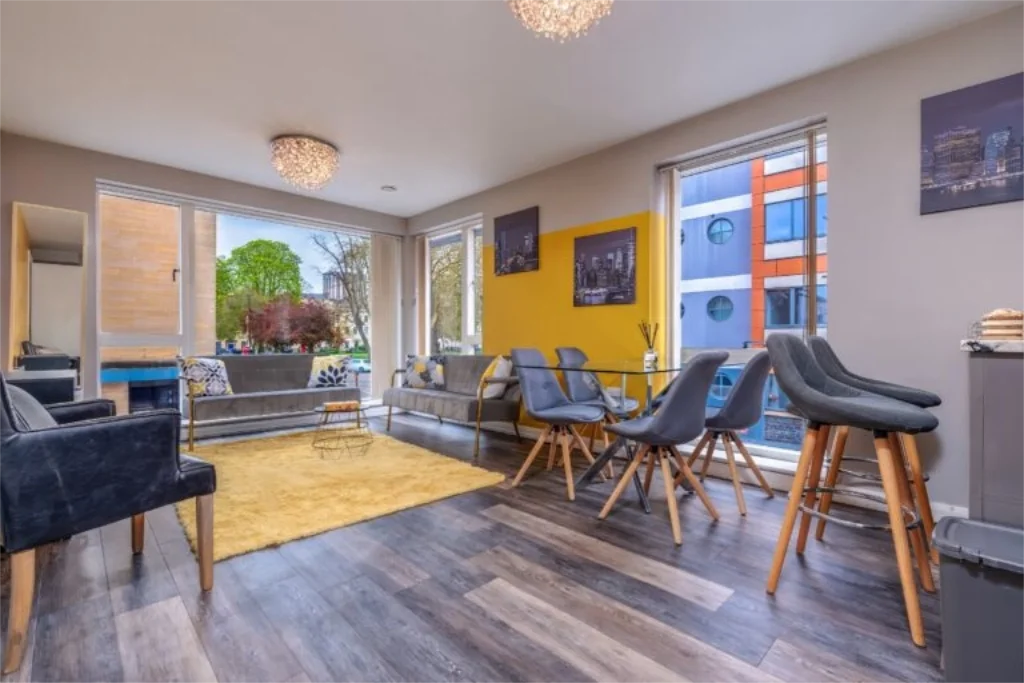
The table, sofa and windows in one shot.
You can see the living and dining areas together, the window line and how many people could sit around the table. A future tenant can judge how the room works. A short let guest can picture their group eating there.
You still cannot tell how big the bedrooms are, what the bathroom looks like or how this room sits on the floorplan. The next photos should answer those questions, not repeat this angle five times.
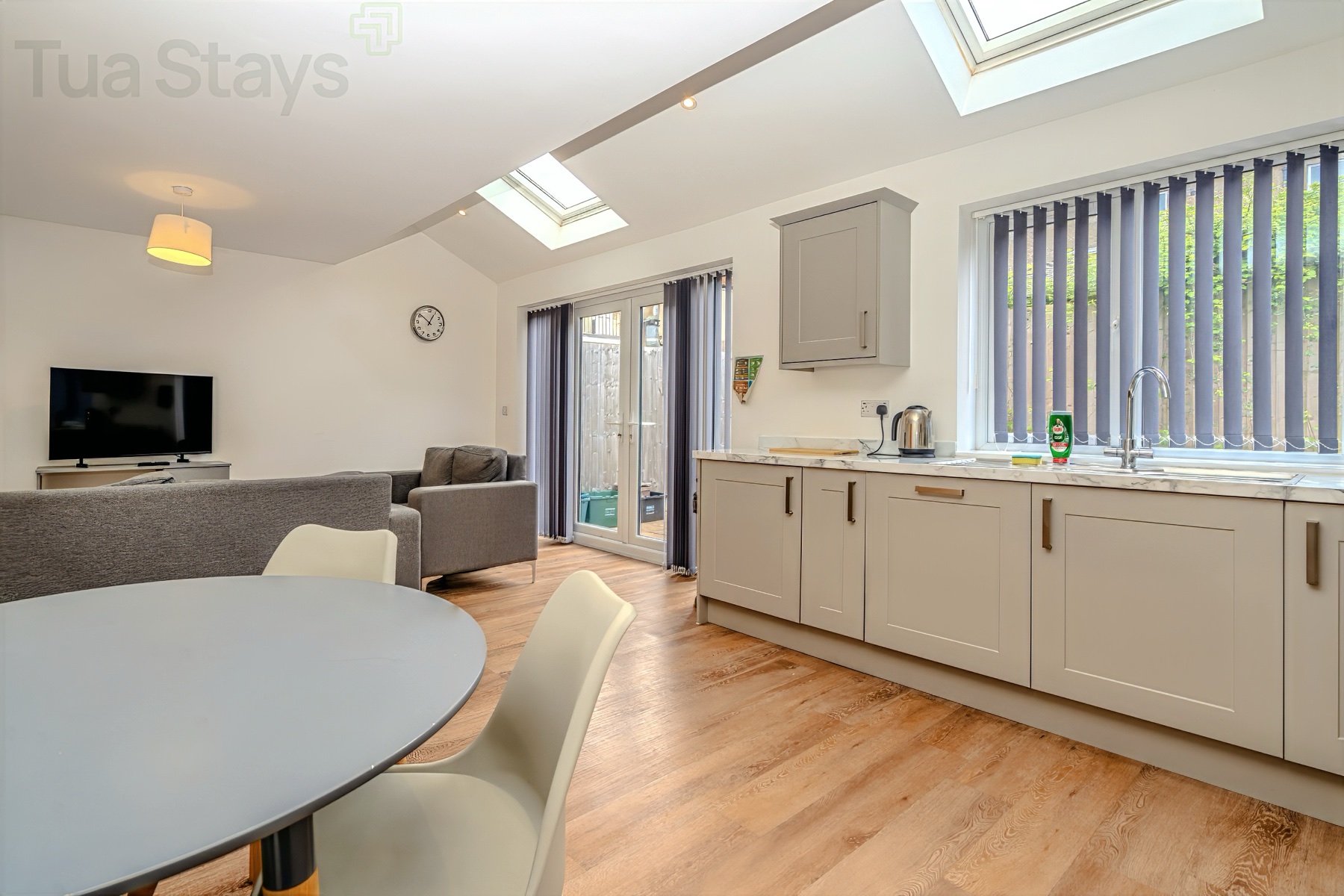
Where will everyone spend the evening?
This view shows the kitchen, table, sofa and route to the outside. That tells a group planning a longer stay far more than a close up of the kettle. We would still add a kitchen photo that shows the appliances and worktop space.
For a long let, the same view helps explain the layout. A wide lens should show how the rooms connect, not make a modest room look twice its size.
Will the best part of the room survive the search crop?
People may see a small search card before they see the full gallery. Move the focus across this photo from Lorna’s home and watch what drops out of the frame.
Keep the main subject near the centre, leave it some room and check the actual portal preview before choosing a cover. Airbnb recommends horizontal photos because its search images are cropped. Other sites use their own layouts.
The original photo stays the same.
Full imageExample search cardWhat would you show first?
These five photos all come from Jennifer’s managed Bristol home. Try putting them in order for a short let, then switch to a long let. This is a practice gallery, not her live listing.
- 01

Living space
Show where people will actually sit, eat and spend time together.
- 02

Bedroom
Make the sleeping arrangement clear before anyone books.
- 03

Bathroom
A guest needs to know whether this is a bath, a shower or both.
- 04

Garden
Show the usable outside space once the sleeping and living basics are clear.
- 05

Useful detail
Use a detail only when the caption explains a real guest benefit.
We would add a wider kitchen view and, for a long let, a floorplan if available. These five case study photos are not a complete letting advert. If a room is missing, photograph it before adding another close up.
See Jennifer’s owner storyMake a shot list from what the advert promises.
Read the current listing, then check whether the photos show every room and every advertised feature. The gaps are your shot list. If you are taking the pictures yourself, The Listing Photo Shoot takes you through the shoot, the gallery and the final check.
Clear, clean and check.
Remove clutter, open blinds, switch on lamps that brighten dark corners and make the beds as they will be presented. Fix obvious faults before the shoot. Check whether personal information, keys, alarm codes or neighbours are visible.
One room view, then the details.
Take a level shot that shows the room before moving in for a close up. Stand at a natural height and keep vertical lines straight. Move back far enough to explain the space, but avoid a lens that stretches it. Then show details people care about, such as a desk, storage or shower.
Check for missing rooms.
Can somebody see every bedroom, bathroom, kitchen, living area, entrance and advertised outside space? Do the beds and seating match the advertised capacity? Are shared facilities labelled? Does the gallery show the current furnishing and condition?
Brighten the picture. Show the room as it is.
Brightening a dark photo or straightening a leaning frame can help. Editing out damage or adding a feature gives people the wrong idea. Airbnb’s listing accuracy rules require photos to represent the space and reject edits that hide flaws or add features. The same standard makes sense for a long let.
Did the new photographs actually help?
Compare similar periods on the same site. Keep the price, availability and advert as steady as you can. If several things changed at once, you will not know which one made the difference.
If the site does not report search impressions, leave those boxes empty and compare views with enquiries or bookings. More people opening the listing but few enquiring? Look through the rest of the gallery and the advert. More enquiries but disappointed viewers or guests? Check whether the pictures promised something the property cannot deliver.
Help Google see what the photo shows.
Use a filename and alt text that describe the actual room, keep the file quick to load and place it near relevant page copy. Naming a bedroom photo “best Bristol luxury rental” tells nobody what is in it. Google’s image guidance points to page context, image quality and descriptive text as ways to help it understand the picture.
What owners ask about listing photos.
How important are photographs for a property listing?
The cover photo can get someone to open the advert. The rest should show enough of the home for them to decide whether to view or book. Better photos will not fix the wrong price, poor availability or a property that does not suit them.
What should long let listing photographs show?
Photograph every room from an angle that shows its shape and condition. Include the kitchen, bathroom, storage, outside space and entrance. Add a clear floorplan where possible. If the home is unfurnished, show it that way.
What should short let listing photographs show?
Show the beds people will use, where they can sit and eat, the bathroom and kitchen, and any advertised work space, parking or outside space. A clear first image can draw people in. The next photos should answer the practical questions before they book.
Do I need a professional photographer for a rental listing?
Not always. A clear phone photo in daylight can be more useful than an expensive wide angle shot that makes the room look bigger than it is. A professional may help when the rooms are tricky to photograph or you need a consistent set of images across several properties. Check their finished shots at phone size.
Cover the words in your listing. What can the pictures tell you?
Ask somebody who has never seen the property to describe it from the photos alone. Put every unanswered question on your shot list. If the rest of the home needs work, our short let preparation guide covers the jobs beyond the camera.