
Holiday let EPC rules in England and Wales
Holiday lets are excluded from higher private rental energy standards for now. Certificate requirements are a separate question.
Read more about Holiday let EPC rules in England and WalesShort letting in Bristol is more attractive than ever, and the rules around it are moving faster than ever too. Between planning, a new national registration scheme, safety obligations and the small print in your mortgage and lease, there is a fair amount to get right before you list. The good news is that none of it is a reason to be put off. It just needs checking properly, once, before you start.
For Bristol owners considering multi platform hosting, explore our short let management in Bristol.
Here is where the main rules stand for a Bristol landlord in 2026, in plain English. Treat it as a map rather than legal advice, and confirm the current detail with Bristol City Council and, where money or contracts are involved, a solicitor, because this is an area that genuinely does keep changing.
The rule people half remember is the ninety night limit. That is a London only rule and does not apply in Bristol. Outside London there is no fixed night cap, but planning can still come into play through the idea of a material change of use. If a property stops being someone's home and effectively becomes a business run as short stay accommodation all year round, a council can take the view that its planning use has changed, and that can require permission.
In practice, occasional or part year short letting of your own home rarely troubles planning. A dedicated, full time short let, especially in a block or on a street where it changes the character of the building, is where questions are more likely. If you are in any doubt about your specific property, a quick pre application check with Bristol City Council is far cheaper than getting it wrong.
The government has legislated for a national registration scheme for short term lets in England, designed to give councils a clear picture of how many properties are being let and where. The direction of travel is settled even where the final start date and the exact detail are still being confirmed. For landlords the sensible assumption is that registering your short let will become a normal, expected step, in the same way a licence or a certificate is, and to build it into your plan rather than be caught out by it. Check the current status before you list, and watch for any Bristol specific requirements layered on top.
Alongside registration, England has been consulting on giving short lets their own planning use class, which would let councils manage numbers in the areas under most pressure. Whether and how that lands will matter most in high demand pockets. The practical takeaway is the same as above. Confirm the current position for your address before you commit, rather than relying on how things worked a year or two ago.
Whatever happens with planning and registration, the safety obligations are not optional, and they are where most private hosts have gaps. Before you take a single booking, make sure you have:
This is exactly the kind of detail we keep on top of for the owners we manage, and where our smart property protection earns its keep.
Two pieces of paperwork catch owners out more than any council rule. If the property is mortgaged, check that your lender allows short letting, since many residential mortgages do not without written consent. If the property is leasehold, read the lease, because some ban short lets or subletting outright. Sorting both before you list saves an expensive problem later.
Short lets sit in their own tax position, and the old furnished holiday lettings regime has now ended, which changes how income and costs are treated. There is also the question of whether your property falls under council tax or business rates. Neither point should stop you, but both are worth understanding early, ideally with an accountant who knows short lets.
Read as a single list, this can look like a lot. In practice it is a one off set up followed by a handful of things to keep in date, and it is entirely manageable, which is the whole point of doing it properly from the start. It is also the part of hosting we take off owners' hands every day, from the certificates to the registration to the insurance.
If you would rather someone else navigated the rules while you keep the income, see how our Bristol Airbnb management works, or talk to our team. To see what your property could earn once it is set up correctly, try our free short let valuation.

We handle pricing, guest communication, cleaning, maintenance and owner reporting.

Holiday lets are excluded from higher private rental energy standards for now. Certificate requirements are a separate question.
Read more about Holiday let EPC rules in England and Wales
The April 2025 changes have rewritten the economics of holiday letting. The government's complete abolition of Furnished Holiday Lettings (FHL)...
Read more about Holiday let tax after FHL abolition
Somerset's countryside holds booking secrets most property owners miss entirely. We've analysed the data behind rural short-let success, and the patterns...
Read more about Somerset Short Let Secrets Nobody Talks About
Price the work for your building and compare it with the extra cash it could save. The January 2026 policy excludes holiday lets from higher PRS MEES.
Read more about How to assess EPC upgrade costs for a Bristol holiday let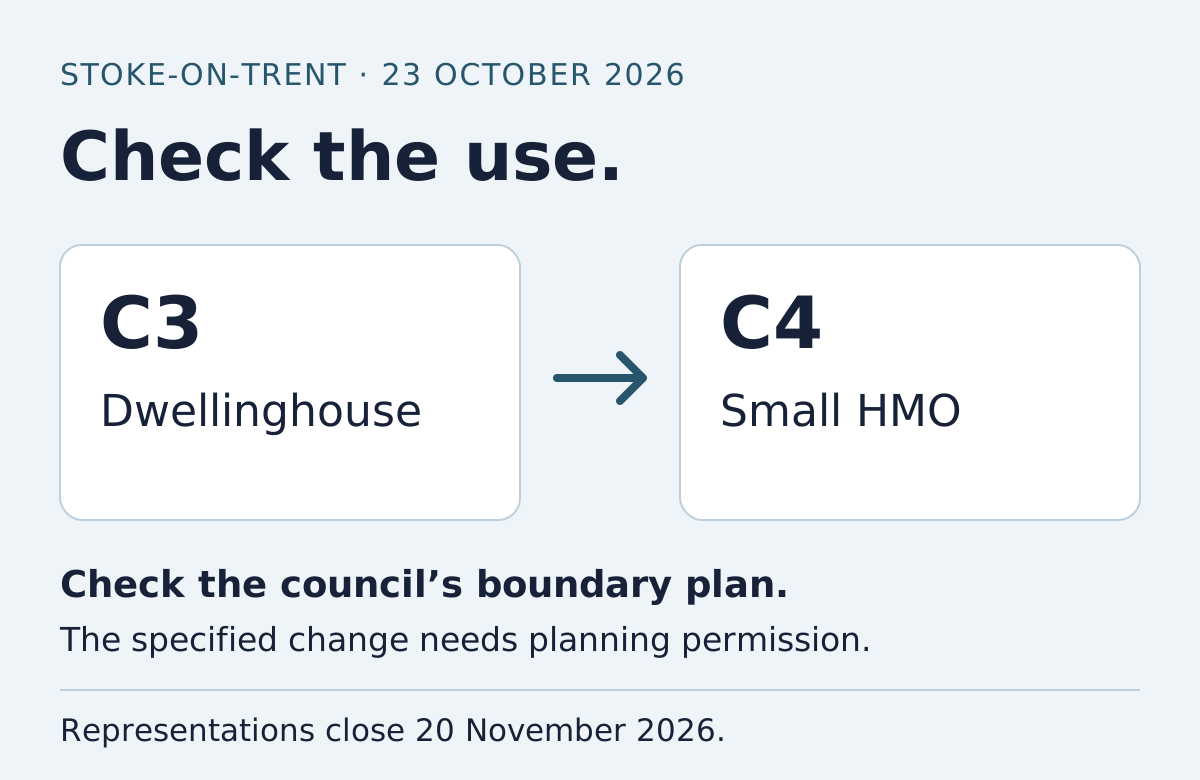
Check the sealed C3 to C4 direction, the actual property boundary and the consultation closing on 20 November.
Read more about Stoke brings small HMO conversions into planning control