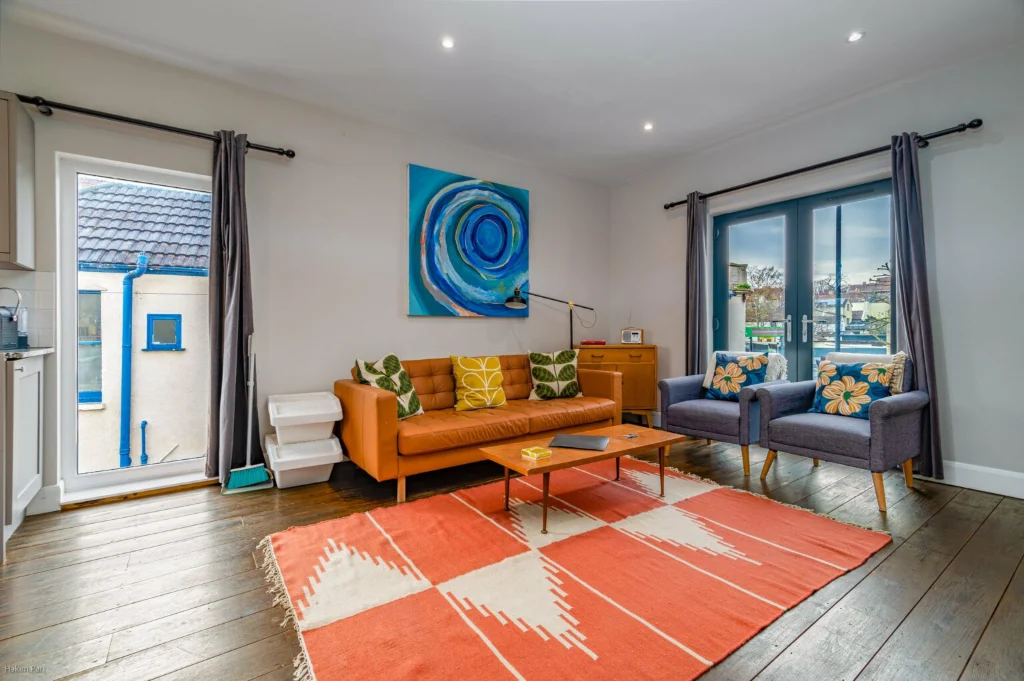
Ask an AI writing tool for a property description and it will give you something polished in seconds. It will probably mention a stunning retreat, a perfect blend of comfort and style, and a vibrant location. Nothing will be misspelled. Almost nothing will help a guest decide whether the property is actually right for them.
That is the problem with AI slop. It is not always wrong enough to look ridiculous. It is often smooth, safe and completely interchangeable. A real home disappears behind words that could describe any flat in any city.
The short answerTrust AI with a first draft, a shorter version or a different structure. Do not trust it with the facts, the judgement or the final version. A person who has seen the property must remain responsible for every claim.
Check your own draftOur free AI property description generator and editor finds stock phrases, vague claims and missing decision details. Add a verified fact sheet and it can rewrite the copy without inventing amenities, distances or property features.
Prefer to work inside ChatGPT or Claude? Connect the same four editing tools through our free MCP connection and use them from the conversation.
This is not an argument for banning useful tools. We already use technology where it genuinely improves property management, pricing and guest service. It is an argument for knowing which part of the job the tool cannot do.
How to make your property description sound less like AI
Do not start again and do not run the draft through an AI detector. Keep the useful facts, open the property photographs and work through these seven edits in order. The aim is not to disguise how the text was produced. It is to make the description specific enough to help someone choose.
- Build a property fact sheet
Write down the details the draft must earn the right to mention: room sizes, bed sizes, natural light, stairs, parking, noise, work space, outdoor space, useful equipment and checked walking times. If you have not seen or verified something, leave it off the sheet.
- Circle every phrase that could describe another listing
Mark words such as stunning, nestled, vibrant, beautifully appointed, hidden gem and perfect blend. Also mark whole sentences that say the home is ideal for everyone or close to everything. These are the passages most likely to sound generated because they contain praise without evidence.
- Replace praise with an observation
Do not search for a cleverer adjective. Replace it with something a guest can picture or check. A light-filled room becomes a west-facing sitting room with late-afternoon sun. A prime location becomes an eight-minute walk from Gloucester Road.
- Choose the guest decision you are helping
A good description does not need to appeal to couples, families, professionals and solo travellers at once. Say what the layout genuinely suits and why. The reader should know within the first two sentences what the property is, where it is and why it may suit their stay.
- Put one useful limitation back in
Mention the stairs, compact shower, permit parking, street noise or lack of outdoor space if it could change a booking decision. A relevant drawback makes the rest of the description easier to trust and filters out guests who would have been disappointed.
- Break the machine rhythm
Delete sets of three, forced transitions and sentences beginning with the same shape. Mix a short factual sentence with a longer explanation. Do not add jokes or fake informality; natural rhythm comes from having different things to say.
- Read it aloud and apply the ten-listing test
If you stumble over a sentence, shorten it. If a sentence could be pasted into ten nearby listings without changing a word, rewrite it around a real property detail or delete it. What remains should sound like somebody who has actually walked through the home.
AI property phrases to delete first
There is nothing magical about any individual word. The problem is using stock language where a useful fact should be. Start with these common swaps.
| AI-sounding phrase | Write this instead |
|---|
| Nestled in the heart of | Name the neighbourhood and the exact walking distance |
| Boasts a stunning | Name the feature directly and explain what is distinctive about it |
| The perfect blend of comfort and style | Delete it; describe the layout, furniture or finish you can verify |
| Moments from everything | Give a checked time to one or two places guests actually use |
| Whether you are here for work or play | Say who the layout suits and name the feature that makes it work |
| Fully equipped kitchen | Name the useful equipment: full-size oven, dishwasher or coffee machine |
| A hidden gem for an unforgettable stay | End with the strongest concrete reason to book, not another slogan |
The five-minute final checkCan every claim be verified? Is there at least one named place or measured distance? Have you included the limitation most likely to affect a booking? Could the opening only describe this property? If any answer is no, the description is not finished.
Why AI property descriptions all start to sound the same
A writing model predicts plausible language from patterns. Give it a thin brief such as "write an attractive listing for my one bedroom flat in Bristol" and it has no observations to work with. It fills the gaps with the safest property language it has seen most often.
That is how an ordinary sitting room becomes an elegant sanctuary, a ten minute walk becomes moments away, and a flat that suits two adults becomes perfect for couples, professionals, families and solo travellers. The machine is not reporting what it saw. It saw nothing.
The adjectives are doing the work of facts
Words such as stunning, beautiful, luxurious and charming are not forbidden. They are simply weak when they replace evidence. "A stunning living room flooded with light" asks the reader to take your word for it. "The west facing sitting room gets its best light after four" gives them something they can picture and check.
Every sentence has the same polished rhythm
Generated copy often arrives in neat sets of three. Relax, unwind and explore. Comfort, style and convenience. Pubs, cafés and attractions. It sounds finished on the first read, then leaves nothing behind. Another common shape is "whether you are here for work or play", which avoids choosing who the property is actually best for.
The location is energetic but strangely anonymous
Look for phrases such as "in the heart of the action" or "close to all the city has to offer" without a named street, venue, walking time or transport stop. Sometimes the details are merely vague. Sometimes the tool has invented them. Check every distance on a map and walk the route before publishing it.
There is no friction anywhere
Real properties have tradeoffs. A top floor flat has stairs. A brilliant central location may have street noise. A compact shower room is still compact. Copy that refuses to mention the one thing a guest most needs to know is not persuasive. It is storing up a complaint.
No single phrase proves that AI wrote it
People use clichés too, and good editors sometimes use writing tools. Do not play detective with one word or a punctuation mark. The meaningful question is whether the description contains specific, accurate observations that only someone familiar with that property could supply.
AI description versus human description
Here is a fair test. Both versions get the same fictional property brief: a one bedroom top floor flat in Cotham, an eight minute walk from Gloucester Road, with a west facing sitting room, a desk in the bedroom, a full size kitchen, a compact shower room, two flights of stairs, no lift, no garden and permit only street parking.
Generic AI draftWelcome to this stunning one bedroom retreat nestled in the heart of vibrant Bristol. Offering the perfect blend of modern comfort and timeless charm, this beautifully appointed home is ideal for couples, professionals and solo travellers alike. Unwind in the light filled living space, prepare delicious meals in the fully equipped kitchen, and enjoy a peaceful night in the serene bedroom. With Gloucester Road and Bristol's top attractions just moments away, this hidden gem is the perfect base for an unforgettable stay.
The paragraph is fluent. It also wastes nearly every fact it was given. "Just moments away" is less useful than eight minutes. "Fully equipped" says less than full size. It does not mention the stairs, parking or small shower room. It calls the flat timeless without identifying a single period feature.
Human rewriteThis top floor flat in Cotham works best for one or two guests who want Gloucester Road close enough for dinner, but not outside the bedroom window. It is an eight minute walk. The west facing sitting room gets its best light in the late afternoon, and the bedroom has a proper desk if you need to work. The kitchen is full size; the shower room is compact. There are two flights of stairs and no lift, no garden, and street parking is permit only. If easy parking or step free access matters, this is not the right flat. If you want a quiet base with cafés, pubs and independent shops on foot, it is.
The second version is better because it makes decisions. It tells the right guest why they will like the flat and helps the wrong guest rule it out before booking. That honesty is not timid marketing. It is how a description creates confidence.
| Generic claim | Useful observation |
|---|
| In the heart of vibrant Bristol | Eight minutes on foot from Gloucester Road |
| Light filled living space | West facing, with its best light in late afternoon |
| Ideal for everyone | Best for one or two guests who do not need step free access |
| Fully equipped kitchen | A full size kitchen beside a compact shower room |
AI photos are the more serious risk
Weak copy makes a listing forgettable. A synthetic or heavily altered photo can make it misleading. The danger is no longer limited to bizarre objects and obvious visual glitches. A single generated room can look convincing. The stronger test is whether the whole set of images describes one physically consistent property.
Compare the room across different angles
Count the windows, doors, radiators, dining chairs and ceiling lights. Follow the skirting board and floor pattern from one image to the next. If a window moves, a doorway disappears or the furniture cannot occupy the space shown in both angles, you are probably looking at an invented or heavily altered scene.
Inspect reflections and repeated details
Mirrors should reflect the room that contains them. Glass doors should agree with the view outside. Watch for repeated cushions, cloned plants, warped sockets, impossible handles, melting tile lines and rails that join nothing. These details are easy to miss when the whole image has been made deliberately attractive.
Check the light, view and season
A bright sunset through one window should affect the shadows in the room. The view should match the floor level, the map and the exterior photograph. Trees, weather and furnishings should not jump between seasons unless the listing says the photos were taken at different times.
Be suspicious of perfection, but do not treat it as proof
A spotless room can be real. A strange socket can be a compression artefact. Detection websites and instinct are not evidence on their own. Ask for another angle, compare fixed features and, if the decision matters, arrange a viewing or a live video walk through.
Where honest editing ends and invention begins
Good property photography is edited. Correcting exposure, white balance and vertical lines helps a camera show the room more faithfully. A sensible crop, mild sharpening and removal of private information are ordinary finishing work. Our photography standards are built around that distinction.
The line is simple: do not change a physical fact that could affect someone's decision. Do not stretch the room, enlarge a window, add furniture, invent a view, erase damage or create an amenity that is not there. If a mop spoils the photograph, move it and take the photograph again. Do not ask software to pretend it never existed.
Virtual staging can be useful for showing potential, especially in an empty sale or long let. Label it clearly and include the unaltered room as well. A guest booking a furnished short let should see the furniture and condition they will actually find.
A copy-and-paste prompt that keeps AI inside the lines
If you still want AI to help, use it as an editor rather than an eyewitness. Give it the fact sheet first, then paste this instruction above your draft.
Copy-and-paste editing promptEdit the property description below using only the facts I have supplied. Remove vague adjectives, superlatives, stock property phrases and claims that could describe any home. Replace generic praise with specific details only where those details appear in my brief. State the most relevant limitation plainly. Do not invent amenities, distances, views, neighbourhood claims or suitable guest types. If a sentence needs a fact I have not supplied, write [CHECK] instead of guessing. Keep the finished description clear, natural and useful rather than luxurious or salesy.
Paste your verified property facts and existing draft underneath it. When the edit comes back, investigate every [CHECK]. Supply the missing fact or delete the claim. Do not ask the tool to make the result sound more human; that usually produces another layer of mannerisms rather than better information.
Do the final human pass
- Check the opening: it should say what the property is, where it is and its strongest genuine reason to book.
- Check every distance: measure it on a map and use a realistic walking time.
- Check the photographs: every room, view and amenity mentioned should appear consistently.
- Check the tradeoff: include the limitation most likely to affect the stay.
- Check the voice: remove any sentence you would never say to a guest during a viewing.
Quick answers
How do I make an Airbnb description sound less like AI?
Remove generic superlatives, add exact observations, name the location properly and include one relevant tradeoff. Write for the guest the layout genuinely suits instead of claiming it is perfect for everyone. Then read it aloud and rewrite anything that could belong to another listing.
What words make a property description sound AI-generated?
Common signals include stunning, nestled, boasts, vibrant, hidden gem, beautifully appointed, seamless and perfect blend. None proves AI was used. They become a problem when they replace facts such as room size, natural light, equipment, walking distance or access.
Should I use an AI humaniser for a property listing?
Usually not. A humaniser can rearrange sentences or swap vocabulary, but it cannot observe the property or recover facts that were never supplied. Editing against a human fact sheet produces a more useful description than disguising one machine-written draft with another.
The verdict
AI is a useful junior copy assistant and a poor witness. It can help you get past a blank page, tighten a clumsy paragraph and create versions for different channels. It cannot visit the flat, notice how the late light lands, decide which compromise matters or answer for an invented claim.
The aim is not to make a listing sound human. It is to make it true, specific and useful. If the final description could only belong to your property, and every photograph agrees with the space a guest will enter, the tool has done its job. If the home has become a stunning hidden gem with a perfect blend of everything, start again.
If you want an honest commercial view of what your Bristol property could earn, start with our short let valuation. If it is a fit, our Bristol Airbnb management team handles the listing, pricing, guest communication and the property itself.
Dealing with a bad guest review? Our guide to removing or responding to negative reviews explains the platform rules, the evidence you need and how to write a useful reply. It includes templates you can adapt for your own property.