
Your own booking channel
How to get more direct bookings for your holiday let
Give guests a reason to find you, a page they trust and a booking they can finish. Then check what you actually keep.
Try the booking cost calculator
A guest likes your photographs, opens your website and cannot find a total price for the dates they want. They close the tab. You have gained another page view and still have an empty weekend.
Getting more direct bookings means making that whole journey work. A booking site gives you somewhere to send people. You still need people who want the home, enough detail to reassure them and a simple way to reserve it. This guide is for holiday let owners and short let managers who want to build that channel properly.
You can keep useful booking platforms in the mix while developing independent demand. Start with one property and a guest type you can serve well. Learn which stays leave money after the work, then repeat what is worth repeating.
Give the guest somewhere useful to land
Build a direct booking site around the property.
Your property page needs to answer the questions someone would ask before paying. Where will everyone sleep? Can they park? Is the kitchen usable for a week? What happens if they cancel? Use photographs and specific answers rather than another paragraph about an unforgettable escape.
A good property management system, or PMS, can connect your booking site to the availability and booking records you already use. That matters when a guest books on your website while another enquiry arrives elsewhere. An attractive page backed by a manually copied calendar creates another job every time a date changes.
Check the connection by following actual situations. A new reservation needs to block the right dates. An owner’s visit needs to stop the home being sold. A cancelled stay needs the correct availability afterwards. Ask how prices, minimum stays and restrictions reach the site and your other channels, including how quickly changes arrive.
At UpgradedPM, our own Upgraded Stays booking site is powered by Upgraded OS. Its website tools cover a hosted site, with Website Pro adding custom domains, pages, offers and analytics. It is our own software, so this is a real example of how we run the service.
If your booking website uses WordPress or another PHP application, ask the host to confirm it has applied the current PHP security fixes. Our October booking website security briefing explains what to confirm with the host and booking provider, and how to keep the guest journey working.
Use a domain people can remember and make it clear who operates the accommodation. Put a working contact route beside the booking details. Ask the software provider how to test a reservation and payment safely, then check what the guest receives and what your team sees. A completed checkout should lead to a clear confirmation and an arrival you can actually deliver.
Our guest message pack helps with enquiries and stay instructions. Adapt it to the booking and the property. Use the property information questionnaire to collect details before writing the site, so you are not promising parking or equipment that nobody has checked.
Would you book this home?
Help a stranger feel comfortable paying you.
A guest who knows a large booking platform may be meeting your business for the first time. They need to understand the home and recognise who is taking the booking. Clear contact details, honest photographs and readable terms all help them make that decision.
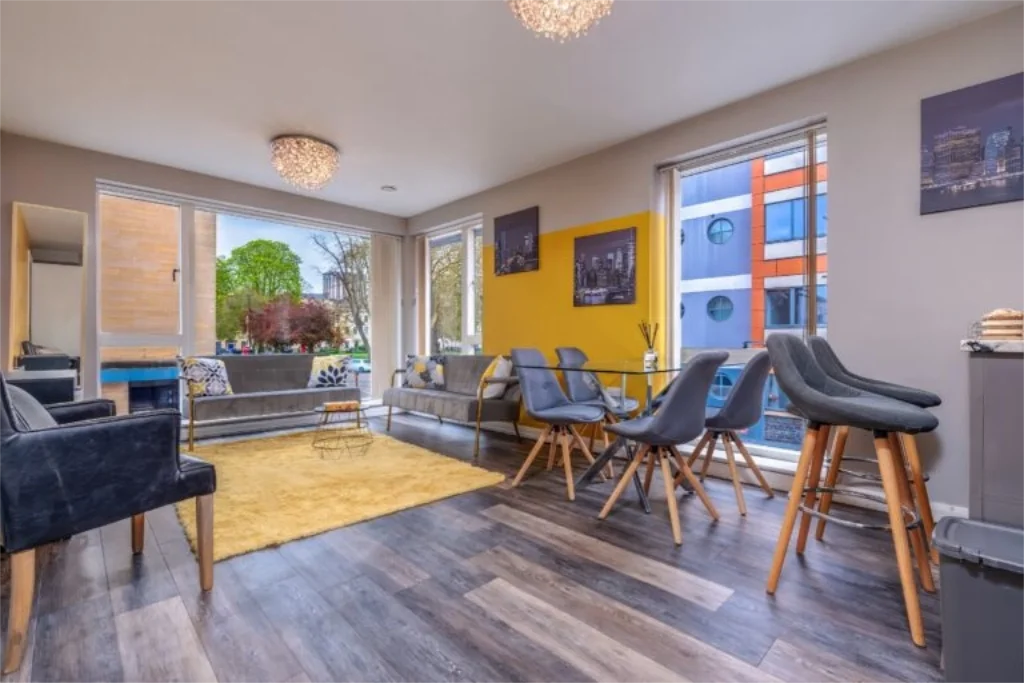
Try the two versions below. They use the same real property photograph. The difference is whether a visitor can work out the sleeping arrangements, the full price and what happens next.
The same photo. Fewer questions.
Would you book from this page?
Both designs use the same real iPhone photo from a home we manage. The property details, prices and cancellation terms are examples for this design comparison.
Before
Beautiful city apartment
Lots of room. Everything you need.
Enjoy a comfortable stay in a great location. Plenty of space for your group, with flexible options available.
Stay from
£100per night
Extra fees may apply.
Flexible options available. Ask us for details.
Clearer
City apartment with two bedrooms
Sleeps 4 in one double bed and two single beds.
Your example stay
Cancel at least 7 days before arrival for a full refund. Cancellations within 7 days are not refunded.
Before leaves the guest guessing about beds, the final price and cancellation. Clearer answers those questions beside the same photograph.
Show the total for the selected stay, including unavoidable cleaning charges, booking fees and applicable taxes. Keep optional extras separate. The CMA’s price guidance explains the requirement for upfront totals. Guests should be able to compare the stay before they reach payment.
Keep cancellation information beside the price. A cheaper non refundable rate is a different offer from a flexible stay. Label the choice clearly instead of making the discount do all the talking. Explain any deposit and how the guest can get help.
Photograph the beds, bathrooms and practical details as well as the prettiest corner. Our listing photography guide shows what short let guests need from a gallery. Good photographs save a guest from having to ask whether the second bedroom actually exists.
Now give people a reason to visit
Find guests your property genuinely suits.
Start with the reason someone needs accommodation in your area. A contractor working nearby, parents visiting a student and a family attending a wedding will ask different questions. The same home may suit more than one group, but a page saying it is perfect for everyone rarely answers any of them well.
Choose a guest type below and try the suggested route on a property you know. These are ideas to test, rather than promises of extra bookings.
People coming for work
Make the work trip easier to arrange.
Show the actual parking arrangement, bed layout, desk, WiFi and laundry facilities. A project coordinator needs to know whether colleagues can share comfortably and whether the dates fit the job.
Where to start
Approach relevant local employers or relocation agents with a concise page about the suitable homes. Agree who books, who pays and how changes are handled before taking a corporate reservation.
What to measure. Count paid stays from each relationship and the cost of servicing them. A longer stay with a weak price can still leave less than a shorter one.
Record the useful property detailsFamilies and visiting relatives
Show how the family will actually stay.
A sofa photograph does not explain who sleeps where. Show the bedrooms and layout, describe access accurately and explain any cot, high chair or parking arrangement the home really offers.
Where to start
Create a useful page for the actual location and reason to visit. Local venues and visitor businesses may recommend suitable accommodation when you can explain its fit and answer enquiries reliably.
What to measure. Check which pages lead to dates being checked and stays being paid for. Do not judge a family page only by how many people opened it.
Plan the photographs guests needYour own past direct customers
Give a familiar guest a useful reason to return.
A previous direct customer already knows what the stay felt like. A relevant message about dates, another suitable home or a real returning guest benefit can be more useful than a generic seasonal sale.
Where to start
Use appropriately collected direct customer contacts. Keep marketing permission and opt outs clear. Send a useful message at a sensible time, with a link to the relevant home and bookable dates.
What to measure. Track completed repeat bookings, unsubscribe requests and the value left after any benefit. Keep platform guest contacts separate from this campaign.
Adapt the guest message packMake local relationships useful.
A venue, employer or relocation agent needs accommodation they can recommend with confidence. Give them a relevant property page, clear availability and someone who answers. Learn what their guests struggle to arrange, then explain how your home helps. A reliable parking space or a sensible bed layout can be more valuable than a glossy brochure.
If a relationship produces regular work, agree the practical details early. Establish who confirms a stay, who pays, what an invoice needs to show and how date changes will be handled. Corporate accommodation can be useful, but accepting a vague promise of future bookings is not the same as having paid reservations.
Write pages that answer a real search.
A useful page about staying near a particular place can explain the journey, the parking, the property layout and why the stay fits that visit. Use accurate travel information and real photographs. Give the reader a route to suitable homes with dates they can check.
Google’s helpful content guidance favours material made to help people. Copying the same paragraph onto dozens of town pages adds little for a guest. Answer the questions you actually receive and update the details when the property changes.
Give social posts somewhere relevant to go.
A short room tour can show the layout better than another static exterior picture. Explain a useful detail, such as where a second person can work or how the parking works, and link to that property. Sending every visitor to a general homepage leaves them to find the home again.
Use an identifiable link for each campaign or partner so you can tell where an enquiry began. You do not need to post everywhere. Start with the places your intended guests actually use and make the route from post to property easy to follow.
Build your own customer relationships
Make returning easy for your direct customers.
A direct customer who enjoyed the stay may have another reason to visit. Keep the business name memorable, make the next booking easy to find and offer a useful reason to return. A relevant home, suitable dates or a modest returning guest benefit can be enough.
Use contacts collected appropriately when customers book with you. The ICO’s email marketing guidance requires valid consent or all the conditions of the applicable soft opt in, including an opt out when details are collected and in later messages. An email address collected for arrival instructions does not automatically belong in a marketing campaign.
Airbnb’s off platform policy includes current, future and repeat bookings, and restricts marketing use of guest contact details. Do not encourage Airbnb guests to move bookings, including future stays, repeat stays or extensions, off Airbnb, or use contact details obtained through Airbnb for marketing. Build independent demand and appropriately collected direct customer relationships.
When a message is appropriate, make it worth opening. Tell the guest why the stay might suit their next visit, show the relevant dates and link to the right home. Our message templates are a starting point for that wording. Replace the generic parts with something useful about the guest’s direct booking and your property.
Keep an eye on what you keep
A direct booking can cost more than you expect.
Saving a channel fee gives you room to work with. A discount, card processing, paid advertising and extra admin can use it up. Enter your own costs below, then try a more expensive campaign or a larger discount.
The calculator compares the same stay through two routes. It shows the amount left after the selling costs entered. It does not calculate the property’s profit or assume a direct guest would otherwise have booked through a platform.
Try your own numbers
What is left from the same stay?
Change the costs or try a worked example. Every starting value is illustrative, including the channel and payment fees.
Enter valid amounts. Percentages must be between 0 and 100.
After the effective channel fee.
After the direct discount and the selling costs entered.
To leave the same amount as the channel, you could spend up to £54.70 winning this booking.
The discount and other direct costs already leave less than the channel, before spending anything to win the booking.
The direct guest pays £855.00. Payment processing takes £17.30.
Compare the same dates and cancellation terms. Enter the effective channel deduction including applicable fee taxes. Allocate only extra website and handling costs to direct bookings. These amounts are before property costs, management charges and tax. Refunds and other costs need their own allowance.
In the starting example, a £900 stay leaves £765 after an illustrative 15% channel deduction. A 5% direct discount, example payment charges and £43 of marketing, website and extra handling costs leave £794.70. The difference is £29.70. You have not saved the full £135 channel fee.
Change the direct discount to 10% and that advantage disappears in this example. It is a useful reminder before making every direct rate cheaper. A rate needs to pay for the stay and leave enough to run the property well.
Try a small paid campaign after the page and booking journey work. Decide what you can afford to spend winning a completed stay. A cheap click that never becomes a booking still costs money. If an agency reports enquiries, ask how many became paid stays and how cancellations were handled in the result.
The income forecast template helps you add the property costs and quieter months. For the seasonal picture, see our guide to whether a short let makes money in winter.
Check what Google can offer your actual business.
Ordinary search traffic can bring guests to a useful property site. Google Vacation Rentals is a separate route with inventory, website and connectivity requirements. Its property manager integration excludes individual homeowners and some types of accommodation. For smaller professional portfolios, Google recommends an approved connectivity provider.
Ask a prospective software provider whether it supports that route for your inventory. A new website or a piece of structured data does not activate it automatically.
Google also says individual holiday homes are ineligible for Business Profiles. A genuinely eligible management or leasing office is a different case. Check the rules for the real business before creating a Maps profile for every apartment.
Follow the stay all the way through
Measure paid bookings, then learn where guests leave.
Visits, enquiries and completed bookings tell you different things. If people cannot find the site, work on the relevant search pages and partnerships. If they visit but never check dates, inspect the page and the offer. If they reach checkout and stop, test the full price, the terms and the payment experience on a phone.
Keep a record of where each direct booking came from, what the guest paid, the selling costs and whether the stay completed. Keep cancellations and refunds visible. A booking confirmation measures a different moment from money retained after the visit.
Compare like for like periods and properties. A summer event week is a poor test against an ordinary winter weekend. Look at the actual stay length, cancellation terms and availability before deciding a new campaign has improved the business.
Useful for understanding which pages attract interest.
Useful for spotting missing details and the demand you might serve.
Check the costs, completion and refunds before judging what it earned.
Make a manageable first test.
Choose one home, one guest type and one route to reach them. Make the page useful, test the booking journey and give the idea enough time to produce a meaningful result. Change the part that is failing before spending more to send people through it.
If you would rather have someone manage that work alongside pricing, guests and turnovers, compare the scope as well as the fee. Our management company comparison gives you questions to ask. Find out who looks after the direct site, who handles an enquiry and how the result appears in your reporting.
Questions about getting more direct bookings
How can I get more direct bookings for a holiday let?
Give people a booking site they can use on a phone, with accurate photographs, availability, a clear total price and cancellation terms. Build demand around the people your property suits, work with relevant local businesses and keep in touch with direct customers who can lawfully receive your marketing. Measure completed stays and the cost of winning them.
Do I need a PMS for a direct booking website?
A small property can have a simple website, but you still need dependable availability and booking records. A booking site connected to a suitable property management system can keep the website and the operation together. Test how a new booking, owner block, price change and cancellation reach every selling channel before accepting guests.
Are direct bookings always more profitable?
No. Discounts, payment processing, marketing, extra website costs and your own handling time can use up the saving on a channel fee. Compare the same stay and cancellation terms using the calculator. The figures show money remaining after the selling costs entered, before property costs, management charges and tax.
Can I encourage an Airbnb guest to book directly next time?
No. Airbnb prohibits encouraging guests to move current, future or repeat bookings, including extensions, off Airbnb. It also restricts marketing use of contact details obtained through Airbnb. Build independent demand and your own direct customer relationships. Read the current policy before planning a campaign.
Will a direct booking site automatically appear on Google Vacation Rentals?
No. Google has separate inventory, website and connectivity requirements. It excludes individual homeowners and some types of accommodation from its property manager integration. A website or structured data alone does not make a property eligible.